
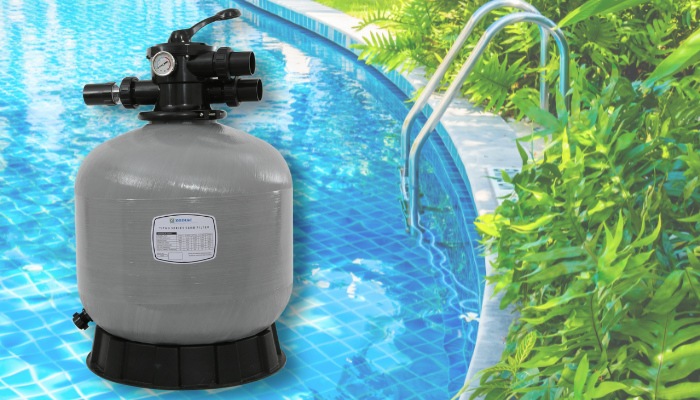


Thinking about installing your own sand filter?
DIY Sand Filter Installation: What You Need to Know Before You Start
So you've watched a few YouTube tutorials, bought a shiny new sand filter, and you're ready to tackle the installation yourself. We get it — there's something satisfying about a successful DIY project, and the potential savings are appealing. But before you grab your PVC cement and start cutting pipes, let's walk through what this job actually involves and the problems you're likely to encounter.
This isn't meant to scare you off. Some of our most capable customers have successfully installed their own sand filters. But knowledge is power, and understanding what can go wrong will help you decide whether this is truly a weekend project or one better left to the professionals.
Understanding What's Involved
A sand filter installation isn't just about connecting a few pipes. You're integrating a critical component into a closed hydraulic system that needs to operate flawlessly under pressure. The filter must be correctly positioned, plumbed with the right pipe sizes, properly sealed, filled with the correct media, and configured to work seamlessly with your pump and chlorinator.
Get it right, and you'll have years of crystal-clear water. Get it wrong, and you're looking at leaks, poor filtration, pump damage, or worse — the dreaded call to a professional to fix what's already been done incorrectly.
Common Problems You'll Encounter
1. Pipe Sizing and Flow Rate Mismatches
Your pump, filter, and plumbing all need to work together as a system. Many DIY installers grab whatever pipe is convenient or assume "bigger is better." In reality, incorrect pipe sizing creates flow restrictions, air locks, and excessive pressure that can damage equipment. Perth pools typically run 40mm or 50mm plumbing — using the wrong size or mixing sizes without proper reducers will cause problems from day one.
2. Valve Configuration Confusion
Multiport valves have six or seven positions, and the plumbing connections must be absolutely correct. Connect the pump outlet to the wrong port, and you'll be pushing water backwards through the filter — or worse, sending unfiltered water straight back to the pool. We've seen pools turn green within days because of this single mistake.
3. Improper Levelling and Positioning
Sand filters are heavy once filled — we're talking 100kg or more for a typical residential unit. They need a stable, level base that won't shift over time. An unlevel filter causes uneven water distribution through the sand bed, creating channels where water takes the path of least resistance rather than being properly filtered. Over time, this leads to poor water quality and premature media replacement.
4. Sand Media Installation Errors
There's more to filling a sand filter than dumping in a few bags. The laterals at the bottom are delicate and easily damaged. You need to protect the standpipe while adding media, use the correct grade of sand (not just any sand from Bunnings), and fill to the proper level. Overfill and you'll get sand in your pool. Underfill and filtration suffers. Damage a lateral and you'll be pulling the whole thing apart to replace a $15 part.
5. Pressure Testing Failures
Every joint, union, and connection is a potential leak point. PVC cement needs proper preparation and curing time. Threaded connections need the right sealant and correct torque — too loose and they leak, too tight and you crack fittings. Many leaks only appear under operating pressure, meaning you won't know something's wrong until the system is running and water is spraying everywhere.
6. Priming and Air Lock Issues
Getting a new installation to prime properly can be frustrating. Air trapped in the system creates locks that prevent proper flow, cause pump cavitation, and can burn out seals. The plumbing layout, valve positions, and priming procedure all need to be correct. If your pump is running but water isn't flowing, diagnosing the problem requires understanding the entire system.
7. Electrical and Automation Integration
If your pool has automated controls, timers, or a salt chlorinator, the new filter needs to integrate correctly. Improper electrical work is not only frustrating — it's dangerous and likely illegal if you're not licensed. In Western Australia, electrical work on pool equipment requires a licensed electrician.
8. Council and Safety Compliance
Pool equipment installations in Perth need to comply with local regulations regarding equipment placement, noise levels, and safety barriers. Non-compliant installations can result in fines and issues when selling your property.
The Hidden Costs of DIY
That money you're saving on labour? It can disappear quickly when things go wrong. Consider the real costs: multiple trips to the hardware store for forgotten fittings, wasted PVC cement that's set before you got the joint right, the new pump seal you burned out from dry running, the sand you have to replace because you used the wrong grade, and the time — often measured in weekends, not hours.
Then there's the warranty consideration. Many manufacturers require professional installation for warranty claims. That five-year warranty on your new filter? It might be void before you even turn it on.
When DIY Makes Sense
If you're replacing a like-for-like filter where the plumbing is already in place, you have genuine plumbing experience, you're comfortable working with PVC under pressure, and you have the time to do it properly — then yes, this might be a reasonable DIY project.
You'll need: a pipe cutter or hacksaw, PVC primer and cement, Teflon tape and thread sealant, appropriate spanners, a level, and ideally a pressure testing setup. Budget a full day minimum, and have a backup plan if things go sideways.
Why Choose Poolwise Padbury
At Poolwise, we install sand filters every week. We've seen every possible configuration, dealt with every brand, and solved every problem that can arise. Our installations include proper system assessment to ensure the filter suits your pool and pump, correct positioning and levelling for optimal performance, professional plumbing with pressure-tested connections, proper media installation with the correct sand grade, full system commissioning and flow testing, integration with existing automation and chlorinators, and a workmanship guarantee that protects your investment.
As Pro Dealers for major brands including Zodiac and AstralPool, we have direct access to technical support, warranty processing, and replacement parts. When we install your filter, you get the full manufacturer's warranty — no arguments, no exclusions.
We also handle the details that DIY installers often overlook: disposing of your old filter properly, checking your pump is correctly matched to the new filter, adjusting your multiport valve settings, and ensuring your filtration cycle times are optimised for Perth conditions.
The Bottom Line
We're not here to tell you that you can't install your own sand filter. Plenty of people do, and some of them do it well. But we are here to make sure you go in with eyes open about what's involved.
If you've weighed up the time, the tools, the risks, and the potential for things to go wrong, and you still want to tackle it yourself — good on you. We're happy to sell you a quality filter and answer your questions along the way.
But if you'd rather spend your weekend enjoying your pool instead of lying underneath it with PVC cement in your hair, give us a call. We'll have your new sand filter installed, tested, and running perfectly — usually within a few days of your call (peak seasons excluded).
Ready to get your new sand filter installed properly? Contact Poolwise Padbury on 08 9403 6000 or book online. We service all northern coastal suburbs from Sorrento to Two Rocks.