

Phosphate Removal Guide for Perth Pools
The Complete Guide to Phosphate Removal
Why Your Pool Keeps Going Green Despite Perfect Chemistry
Green pool water despite perfect chlorine? Phosphates might be the hidden culprit.
The Hidden Culprit Behind Stubborn Algae
You've tested your water religiously. The pH is perfect at 7.4. Free chlorine is sitting at a healthy 3ppm. Your salt chlorinator is humming along nicely. Yet somehow, your pool keeps turning green. Sound familiar?
If you're nodding along, you're not alone. This is one of the most common frustrations we hear from Perth pool owners, especially during summer. The good news? There's usually a simple explanation – and it has nothing to do with your chlorine levels.
The culprit is phosphates – an invisible nutrient that acts as a superfood for algae. And in Perth's unique environment, phosphates are practically everywhere.
What Exactly Are Phosphates?
Phosphates are chemical compounds containing phosphorus – an essential nutrient found throughout nature. They're in our soil, our water supply, our fertilisers, and even in many household products we use every day.
In the environment, phosphates are crucial for plant growth. That's exactly why farmers add them to crops. But here's the thing – algae are plants too. And just like your garden loves a good feed, algae absolutely thrive when phosphates are present in your pool water.
How Phosphates Enter Your Pool
Understanding where phosphates come from is the first step to controlling them. In Perth, we have several unique local factors that make phosphate management particularly important.

Perth's bore water can carry phosphates from decades of fertiliser use in surrounding soil.
Perth's Bore Water Challenge
If you're topping up your pool with bore water – as many Perth homeowners do – you may be inadvertently adding phosphates with every top-up. Perth's groundwater passes through soil that has been fertilised for decades, and these phosphates can accumulate in the aquifer. The WA Department of Water has noted that fertilisers high in phosphate are a major contamination concern for Perth's groundwater.
Garden Runoff and Fertilisers
Perth's sandy soils don't hold nutrients well, which means fertilisers applied to lawns and gardens can easily wash into pools during rain or irrigation. Even wind-blown fertiliser dust from several houses away can find its way into your water.
Environmental Debris
Leaves, grass clippings, pollen, and dust all carry phosphates. Perth's summer storms can wash accumulated dust and debris from surrounding trees directly into pools. Even well-maintained pools receive a constant supply of airborne organic matter.
Swimmers Themselves
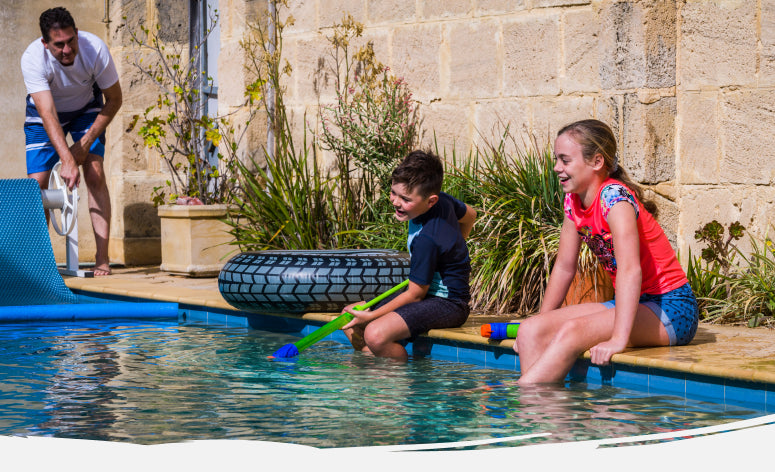
Here's one that surprises many pool owners: swimmers are a significant source of phosphates. Sweat, body oils, sunscreen, hair products, and yes – especially children who might have a little 'accident' in the pool – all introduce phosphates into the water.
Common Phosphate Sources at a Glance
| Source | How It Enters Your Pool |
|---|---|
| Bore Water | Groundwater contaminated by decades of fertiliser use |
| Lawn Fertilisers | Wind drift and irrigation runoff from treated lawns |
| Leaves & Debris | Decomposing organic matter releases stored phosphorus |
| Rainwater | Washes dust, pollen, and debris from trees and surfaces |
| Swimmers | Sweat, sunscreen, body oils, hair products, urine |
| Some Pool Chemicals | Certain metal sequestrants and stain removers contain phosphates |
| Birds & Wildlife | Droppings from birds, fruit bats, and other animals |
The Science: Why Phosphates Make Chlorine Seem Ineffective
Here's where many pool owners get confused. High phosphate levels don't actually weaken your chlorine. What they do is far more insidious – they accelerate algae growth to the point where your chlorine can't keep up.
According to pool chemistry experts, "the rate of chlorine kill remains the same, but the rate of algae growth can be much faster with high phosphates." It's essentially a race between how fast algae can reproduce (every 3-8 hours in ideal conditions) versus how quickly chlorine can eliminate them.
When phosphates are under control, maintaining crystal-clear water becomes dramatically easier.
When phosphates are high, algae reproduction accelerates. Your chlorine is constantly fighting to kill algae that are reproducing at an extraordinary rate. Eventually, the chlorine gets exhausted – not because it's weak, but because the growth rate simply exceeds the kill rate.
This explains why you might shock your pool, get it crystal clear, only to have it turn green again within days. The chlorine killed the existing algae, but didn't address the phosphate buffet that was waiting to feed the next generation.
Understanding Phosphate Levels
Phosphate levels are measured in parts per billion (ppb) or parts per million (ppm). Here's how to interpret your test results:
| Level | Status | Action Required |
|---|---|---|
| Below 100 ppb | Ideal | Maintenance dosing every 2-3 weeks |
| 100-500 ppb | Monitor | Treatment recommended before summer |
| 500-1000 ppb | Elevated | Active treatment required – use standard phosphate remover |
| 1000-2000 ppb | High | Intensive treatment with concentrated formula |
| Above 2000 ppb | Critical | Heavy-duty treatment (Lo-Chlor Starver X) required |
Testing for Phosphates
Standard pool test kits don't include phosphate testing – you'll need a dedicated phosphate test kit. The good news is that these are readily available and easy to use.
Before You Test:
- Ensure water is balanced (pH 7.2-7.6)
- Chlorine should be below 5ppm for accurate readings
- If algae is visible, treat it first before testing phosphates
- Test at least 24 hours after any chemical additions
We stock the Lo-Chlor Phosphate Test Kit in-store, which provides quick and reliable results. Alternatively, bring a water sample to Poolwise Padbury and we'll test your phosphate levels as part of a comprehensive water analysis.
Treating High Phosphate Levels
Phosphate removers work by binding to phosphate molecules and making them large enough to be captured by your filter. Here's the systematic approach we recommend:
Step-by-Step Treatment Process
- Kill any existing algae first – phosphate removers starve algae; they don't kill what's already there
- Backwash your filter – you'll need clean filter media to capture the phosphate compounds
- Balance your pH to 7.2-7.4 for optimal effectiveness
- Add the phosphate remover according to your test results and pool size
- Run your filter continuously for at least 24 hours
- Monitor filter pressure and backwash when it rises (the product is working!)
- Retest after 48 hours and repeat if necessary
⚠️ Important: The Order of Treatment Matters
Never use phosphate remover to treat an active algae bloom. When you kill algae, they release the phosphates stored in their cell walls back into the water. This is why many pool owners experience a frustrating cycle:
- Shock the pool → algae dies → water clears
- Dead algae releases phosphates
- New algae blooms within days, feeding on released phosphates
- Repeat endlessly...
The solution? Shock first, then remove phosphates. This one-two punch kills the existing colony and eliminates the food source so they can't come back.
Product Selection Guide
Not all phosphate removers are created equal. Here's how we match products to problems:

Lo-Chlor Starver
For: Maintenance (Below 1000 ppb)
The original Australian phosphate remover, developed by the CSIRO. Ideal for ongoing maintenance with its patented formula that won't cloud your water.
Dose: 500ml per 50,000L every 2-3 weeks

Lo-Chlor Starver X
For: High Levels (Above 2000 ppb)
The heavy-duty option for serious phosphate problems. One litre removes up to 6000 ppb from a 50,000L pool. Expect temporary cloudiness that clears in 24-48 hours.
Perfect for spring start-up or severe outbreaks
For Natural/Organic Preference
Zodiac Phosphate Remover – A 100% organic and natural formula using rare earth salts. Suitable for all filter types and gentle on pool surfaces. Great for those who prefer eco-friendly pool care.
Perth-Specific Considerations
Living in Perth means dealing with some unique phosphate challenges:
☀️ Summer Heat
Our hot summers accelerate algae growth significantly. What might be a minor phosphate issue in cooler months can become a major problem when temperatures climb above 30°C. This is why we recommend getting phosphate levels under control before summer hits.
🏖️ Sandy Soils
Perth's sandy soils don't retain nutrients well, meaning fertilisers wash through quickly and can easily end up in pools. If you're in an area with active gardening or new developments, you may experience higher phosphate loads than average.
💧 Bore Water Usage
Many Perth homes use bore water to top up pools. While this saves money, it can introduce phosphates with every top-up. If you're using bore water, we recommend testing phosphate levels monthly during summer and after significant top-ups.
⛈️ Post-Storm Surges
Perth's summer storms can wash significant debris and dust into pools. It's common to see phosphate levels spike after rain, particularly if there's been a long dry spell before the storm. Test phosphates after any significant rainfall.
Preventing Phosphate Build-Up
The best approach to phosphate management is prevention. Here's how to minimise phosphate introduction:
- Skim regularly – remove leaves and debris before they decompose
- Be careful with fertilisers – apply on calm days, away from the pool, and water in thoroughly
- Encourage pre-swim showers – especially after applying sunscreen or hair products
- Maintain filter efficiency – clean or backwash regularly to capture debris before it breaks down
- Use maintenance doses – small, regular doses of phosphate remover prevent accumulation
- Test regularly – monthly testing catches rising levels before they become problematic
- Keep landscaping in check – trim overhanging trees and keep mulch away from pool edges
Regular skimming removes organic matter before it decomposes and releases phosphates.
Frequently Asked Questions
Can I swim after adding phosphate remover?
Yes, phosphate removers are non-toxic and safe for swimmers. However, the water may appear cloudy for 24-48 hours while the product works. Most people prefer to wait until the water clears.
Why did my pool go cloudy after treatment?
This is actually a good sign! The cloudiness indicates the phosphate remover is binding to phosphate molecules, making them large enough to filter out. Run your filter continuously and backwash when pressure rises – the cloudiness will clear within 24-48 hours.
How often should I test for phosphates?
We recommend monthly testing during swimming season, and after any significant events (heavy rain, lots of swimmers, or visible debris). If you have ongoing algae issues, test fortnightly until levels are consistently under control.
Can I use phosphate remover in a cartridge filter pool?
Some products (like Lo-Chlor Starver) are designed for sand, DE, and glass media filters only. For cartridge filters, use products specifically labelled as cartridge-compatible, such as Zodiac Phosphate Remover. Always check the product label.
Will phosphate remover affect my salt chlorinator?
No – in fact, removing phosphates can actually improve chlorinator efficiency. High phosphate levels increase chlorine demand, making your chlorinator work harder. By reducing phosphates, your chlorinator can maintain adequate chlorine levels more easily.
The Bottom Line
Phosphate management is one of those pool maintenance secrets that separates consistently clear pools from frustratingly green ones. The principle is simple: no phosphates = no algae food = no algae.
If you've been fighting a losing battle against algae despite perfect chemistry, it's time to test your phosphate levels. And if you're not sure where to start, bring a water sample into Poolwise Padbury. We'll test your phosphate levels, assess your situation, and recommend the right products for your specific needs.
Remember: prevention is always easier than cure. A small maintenance dose of phosphate remover every few weeks is far less effort than recovering from a full algae bloom.
Need Help With Phosphates?
Visit us at Poolwise Padbury for:
✓ Free phosphate testing with any water sample
✓ Expert advice on the right treatment for your pool
✓ Full range of Lo-Chlor Starver products
✓ Maytronics Elite Dealer service and support
📍 Shop 14, 75 Warburton Avenue, Padbury WA 6025
📞 (08) 9403 6000 | 🌐 poolwise.com.au
⏰ Open Monday through Sunday in Summer
Sources and Further Reading
- Lo-Chlor Chemicals – Understanding Phosphates
- Zodiac Australia – Pool Algae Guide
- Orenda Technologies – Phosphates, Algae, and Chlorine Demand
- WA Department of Water – Perth Groundwater Quality Guidelines
- Hy-Clor Australia – Pool Algae Types
- LaMotte Pacific – Pool Water Testing Australia Guide
Disclaimer: This guide is intended for general information purposes. Always read and follow product label instructions. For complex pool problems or unusual circumstances, consult with a pool professional. Pool water chemistry can vary significantly based on local conditions, pool type, and usage patterns.
© 2024 Poolwise Padbury. All rights reserved.