

DIY Rust Stain Removal for Pools
The Vitamin C Trick: Removing Metal Stains From Your Pool
A surprisingly simple and safe method that Perth pool owners are using to dissolve stubborn rust and iron stains in minutes

If you've noticed unsightly brown, orange, or rust-coloured stains appearing on your pool surfaces, you might be surprised to learn that the solution could be sitting in your medicine cabinet right now. Ascorbic acid, better known as Vitamin C, has become one of the most effective and safest methods for removing certain types of pool stains, and it works remarkably fast.
This isn't just a home remedy myth either. Pool professionals around the world have been using this technique for years, and the science behind it is solid. Let's explore exactly what stains Vitamin C can remove, how to use it properly, and what to expect when you try it yourself.
What Stains Will Vitamin C Actually Remove?
Before you rush out to buy a bag of ascorbic acid powder, it's important to understand that Vitamin C is not a universal stain remover. It works brilliantly on certain types of metal stains, but it's completely ineffective on others. Here's a clear breakdown:
| Stain Type | Appearance | Vitamin C Effectiveness |
|---|---|---|
| Iron / Rust | Brown, orange, rusty red | ✓ Excellent – Works within minutes |
| Manganese | Black, purple-black, brown-black | ◐ Moderate – May need additional treatment |
| Cobalt | Blue-grey | ✓ Good – Generally effective |
| Copper | Blue-green, teal, turquoise | ✗ Not Recommended – Can darken stains |
| Organic (leaves, algae, worms) | Green, brown patches | ✗ Ineffective – Use chlorine instead |
| Calcium/Mineral Scale | White, chalky deposits | ✗ Ineffective – Use acid wash |

Ascorbic acid can actually make copper stains worse. It catalyses further oxidation of copper, potentially turning brown copper stains black. If you suspect copper staining (blue-green or teal colours), use citric acid-based products instead, or bring a water sample to Poolwise for testing.
The Quick Stain Test: Is Vitamin C Right for Your Stain?
Before committing to a full treatment, you can perform a simple test that takes less than a minute. This will tell you definitively whether Vitamin C will work on your particular stain.
- Grab a standard Vitamin C tablet (500mg or 1000mg) from your medicine cabinet or chemist
- Press the tablet firmly against the stain underwater for 30 seconds
- Rub it gently across the stained area
- Observe the results immediately
You have a metal stain (likely iron) and Vitamin C treatment will work. Proceed with the full treatment method below.
Your stain is likely organic (leaves, algae, tannins) and requires a different approach. Shock treatment with chlorine and vigorous brushing is usually the answer for organic stains.
Powder vs Tablets: Which Is Easier to Use?
You can purchase Vitamin C (ascorbic acid) in two main forms for pool use: powder and tablets. Each has its advantages depending on what you're trying to achieve.
Tablets Best for Spot Testing
Perfect for testing individual stains and treating small, localised spots. Simply place the tablet directly on the stain, let it sit for 10-15 minutes, then rub and brush. The controlled dissolution makes it easy to target specific areas without affecting the rest of your pool chemistry significantly.
Powder Best for Full Treatment
Far more economical for treating widespread staining across your entire pool. Powder dissolves quickly and can be distributed evenly around the pool perimeter. For spot treatment, you can make a paste by mixing powder with a small amount of pool water in a shot glass, then apply directly to stains.
For stubborn localised stains, fill a shot glass with pool water, add a teaspoon of ascorbic acid powder, stir to create a concentrated paste, then apply directly to the stain. This delivers a high concentration exactly where you need it.
How Much Vitamin C Do You Need?
The general guideline is approximately 100-300 grams of ascorbic acid per 10,000 litres of pool water, though many professionals recommend starting conservatively at 200g per 40,000 litres (a typical Perth backyard pool) and adding more only if needed.
For severe staining, you may need up to 450g per 40,000L. It's always better to start with less and add more rather than overdoing it, as excess ascorbic acid will consume your chlorine and take longer to rebalance.
How Quickly Does It Work?
One of the most satisfying aspects of Vitamin C treatment is how dramatically fast it works. Pool owners consistently describe watching stains literally disappear before their eyes.
The Tricky Part: Treating Wall Stains
While floor stains are relatively straightforward to treat (you can let tablets sink and dissolve directly on them), wall stains present a greater challenge. The Vitamin C needs prolonged contact with the stained surface to work, and gravity isn't on your side.
Methods for Wall Stains:
The Sock Method: Crush several Vitamin C tablets into powder, place them in a thin cotton sock or stocking, then hold the sock against the stained wall area for several minutes. The fabric holds the dissolving powder against the surface while allowing the acid to penetrate.
The Paste Method: Create a thick paste using ascorbic acid powder and just enough water to make it cling. Apply the paste directly to the wall stain using a sponge or your hand. For stains at the waterline, you may need to lower the water level temporarily to keep the paste in place.
Repeated Treatment: Wall stains often require multiple applications. Unlike floor stains where the product can pool and concentrate, wall stains may need 3-4 treatments over consecutive days to fully lift.
For stains above the current water level, you'll need to lower the pool water, apply the paste method, allow 15-30 minutes of contact time, then brush vigorously before refilling. These are typically the most stubborn stains to remove.
Are There Any Side Effects?
While Vitamin C is non-toxic and perfectly safe for swimmers, it does affect your pool chemistry in several ways that you need to manage:
Unlike many pool chemicals, ascorbic acid is non-toxic and won't irritate skin or eyes. You can swim shortly after treatment once chlorine levels return to normal. It's the same Vitamin C you take as a supplement!
The Critical Step Most People Miss: Sequestrant
Here's what many DIY pool owners don't realise: removing the stain is only half the battle. When Vitamin C dissolves metal stains, it doesn't remove the metal from your pool. It simply converts the solid oxidised metal (the visible stain) back into dissolved metal ions in your water.
This means the metal is still there, just invisible. As soon as you add chlorine back to your pool, the chlorine will oxidise those metal ions again, and your stains will return, often within days.
After successful stain removal, you MUST add a quality metal sequestrant (HEDP-based products work best). This binds to the dissolved metals and prevents them from re-depositing as stains. You'll need to maintain this sequestrant level ongoing, usually with weekly additions.
Step-by-Step Treatment Process
- Test first: Confirm Vitamin C works on your stain using a tablet
- Lower chlorine: Let FC drop to 0-1ppm naturally, or use sodium thiosulfate to speed this up
- Reduce pH: Lower pH to around 7.0-7.2 for best results
- Add algaecide: With zero chlorine, add Lo-Chlor Pool Algaecide to prevent algae bloom
- Set filter to recirculate: Or remove cartridge filters to prevent clogging
- Add ascorbic acid: Distribute around the pool perimeter using a cup
- Circulate 30-60 minutes: Watch the magic happen
- Add more if needed: Apply additional product to any remaining stains
- Add sequestrant: Once stains are gone, add metal sequestrant immediately
- Slowly restore chlorine: Raise FC gradually over several days, watching for stain return
- Maintain low pH: Keep pH around 7.2 for the first week or two
- Do not shock for 1-2 weeks: High chlorine can cause stains to return
Preventing Future Metal Stains
Once you've successfully removed your stains, prevention becomes key. The metals got into your pool somehow, and if you don't address the source, stains will inevitably return.
Common metal sources in Perth pools: bore water or well water (high iron content), older copper pool heaters, corroded equipment from unbalanced pH, copper-based algaecides, and even debris from nearby construction or roofing.
Test your fill water for metals and maintain regular sequestrant additions if metals are present. Keep pH stable in the lower range (7.2-7.4) if you have ongoing metal issues, as high pH promotes metal precipitation and staining.
Recommended Product: Lo-Chlor Metal Solution
After successfully removing stains with Vitamin C, you need a quality metal sequestrant to prevent them returning. We recommend Lo-Chlor Metal Solution, an Australian-made concentrated sequestrant that's been trusted by pool professionals for decades.
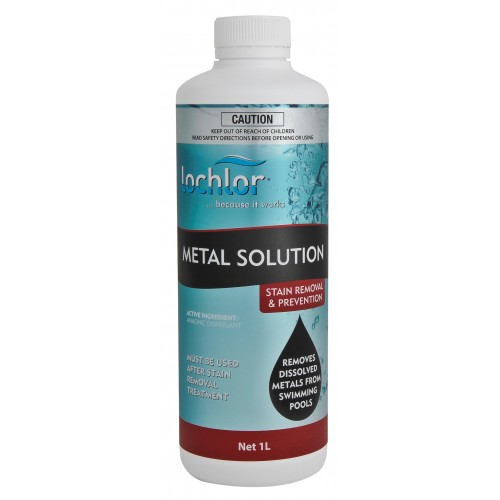
Lo-Chlor Metal Solution 1L
Concentrated Metal Sequestrant for Pools & Spas
Once your stains have lifted, add the initial dose of Lo-Chlor Metal Solution immediately while the pump is circulating. Then maintain with a weekly dose to keep metals sequestered and prevent stains from returning. Note: This product will lower pH and total alkalinity, so bring these levels back up slowly after treatment.
Need Help With Stubborn Pool Stains?
Bring a water sample to Poolwise Padbury and we'll test for metals and help you identify the best treatment approach. We stock Lo-Chlor Metal Solution and other quality stain removal products.
📍 Shop 14, 75 Warburton Avenue, Padbury | 📞 (08) 9403 6000